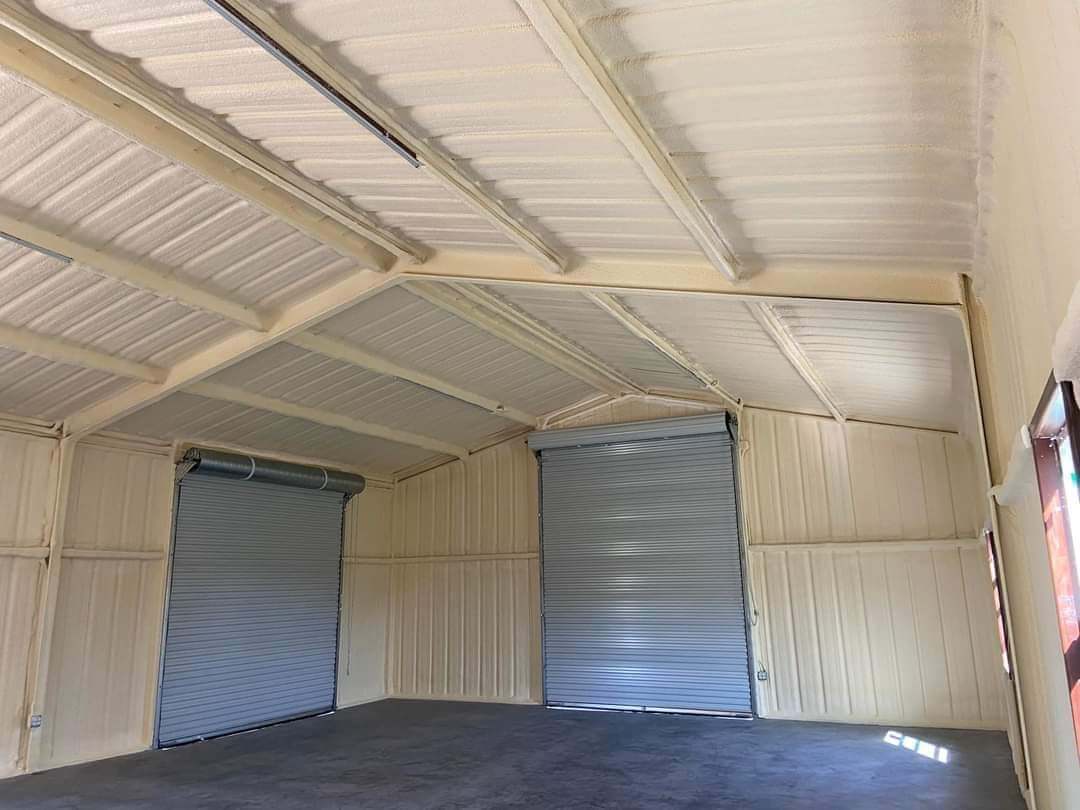
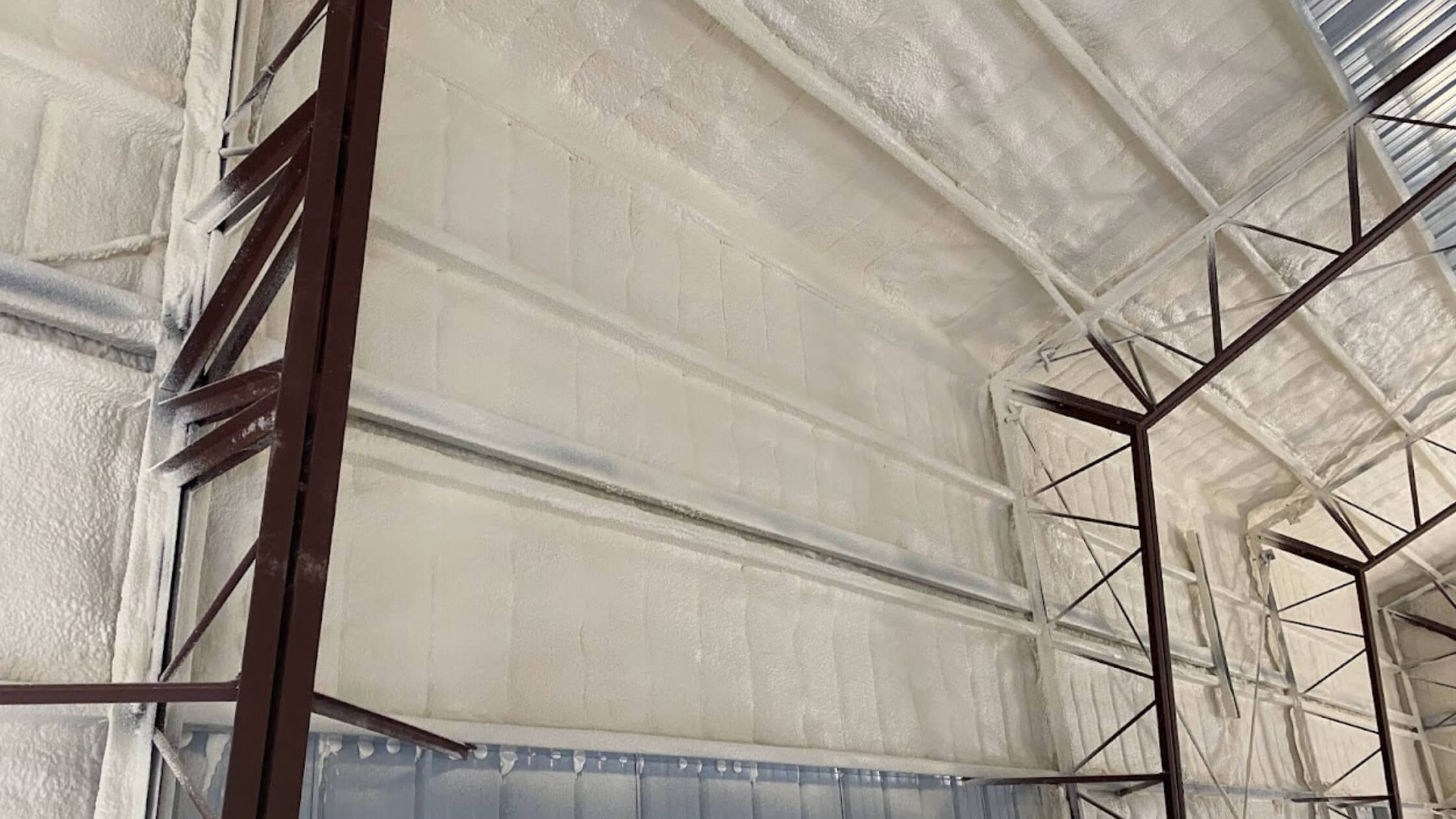
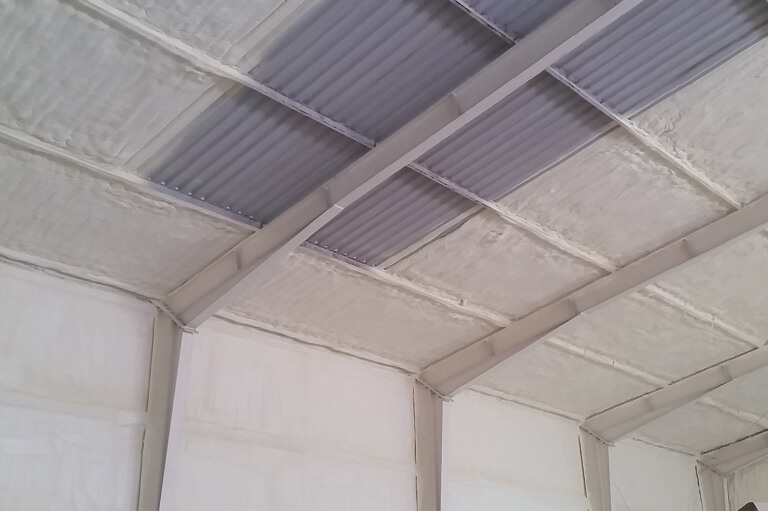
HANGAR INSULATION. HANGAR INSULATION WITH POLYURETHANE CLOSED-CELL TECHNOLOGY. Insulating hangars is one of the most important aspects of ensuring the proper operation of buildings, especially in Lithuania, where climatic conditions can be very variable. Polyurethane closed-cell technology is now becoming an increasingly popular choice due to its efficiency, durability and cost-effectiveness. In this article, we will discuss why you should choose polyurethane closed-cell insulation solutions for hangars and what are the main advantages of this technology.
What is polyurethane closed-cell technology?
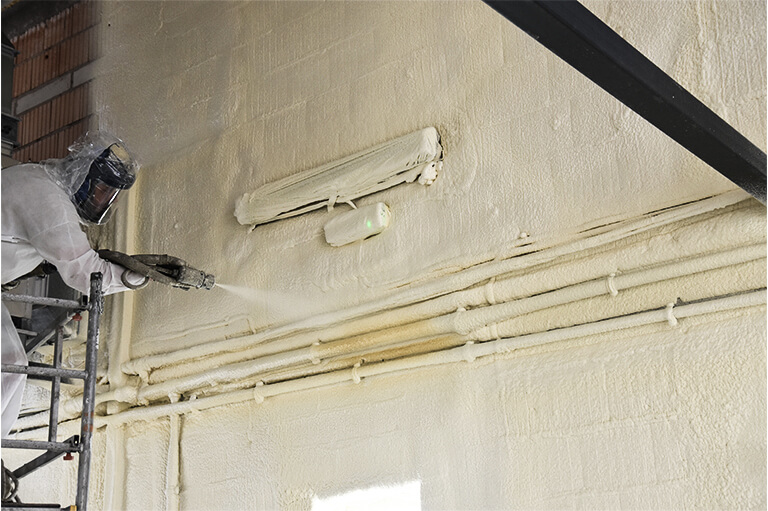
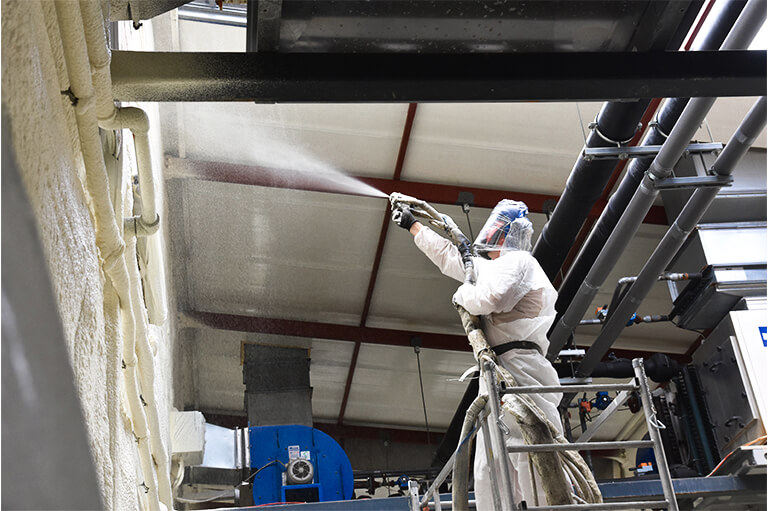
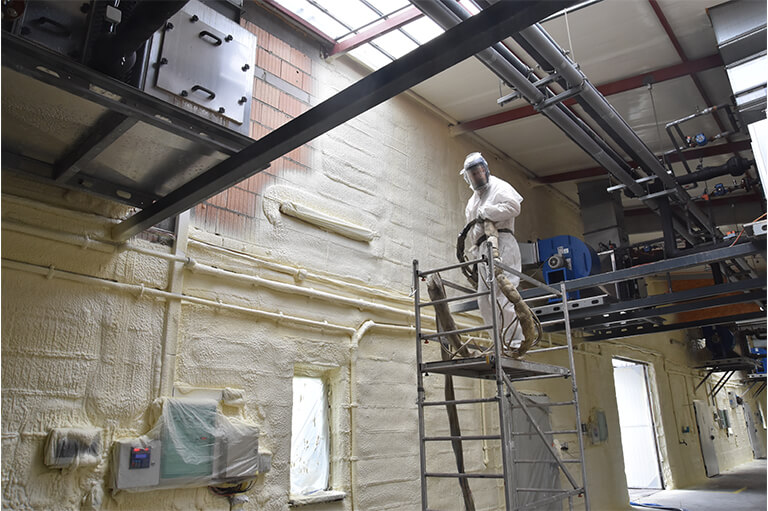
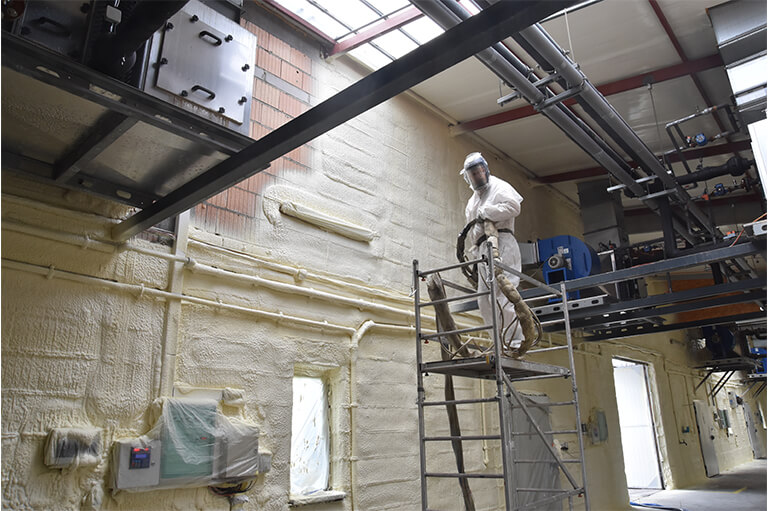
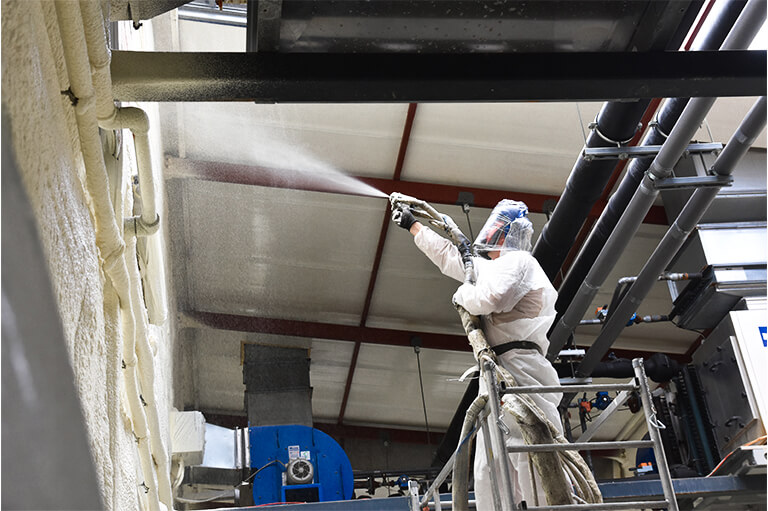
Polyurethane closed-cell foam is an insulation material made of two components: polyol and isocyanate. These components are mixed using special equipment and sprayed directly onto the surface to be insulated. The reaction of the mixture produces a dense foam structure with closed pores which effectively insulates heat and moisture.
The main advantages of polyurethane closed-pore insulation
- Excellent thermal insulation. Polyurethane closed-cell foam has an extremely high thermal insulation coefficient. This means that when insulating hangars with this material, it is possible to achieve better thermal insulation results with a lower layer thickness compared to other insulation materials.
- Moisture resistance. The closed pore structure ensures that the foam does not absorb moisture, providing excellent protection against moisture and condensation. This is particularly important for hangars where moisture-sensitive goods or equipment are often stored.
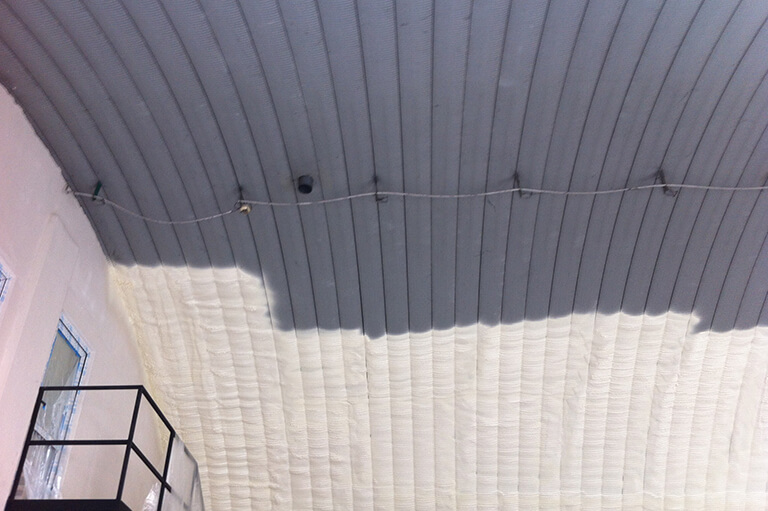
- Quick and easy installation. The polyurethane closed-cell foam is sprayed directly onto the surface, making the insulation process very quick and easy. This saves time and labour costs. In addition, the foam adheres perfectly to a wide range of surfaces such as metal, concrete or wood, so no additional fixing tools are needed.
- Durability and resistance. Polyurethane foams are highly resistant to environmental influences such as temperature fluctuations, chemicals or mechanical damage. This ensures a long service life of the insulation system without additional maintenance work.
- Cost-effectiveness. Although polyurethane closed-cell foam may be slightly more expensive than some other insulation materials, its durability and efficiency will save running costs in the long run. In addition, the excellent thermal insulation can reduce heating and cooling costs.
Conclusions
Polyurethane closed-cell technology is a modern and efficient solution for the insulation of hangars. It provides excellent thermal insulation, moisture resistance, durability and cost-effectiveness. These advantages make polyurethane foam an increasingly popular choice for the insulation of not only hangars but also other buildings. If you are planning to insulate your hangar, it is worth considering this advanced technology, which will pay for itself in the long run and provide a high level of comfort and efficiency.
How to insulate hangars with closed-cell polyurethane foam.
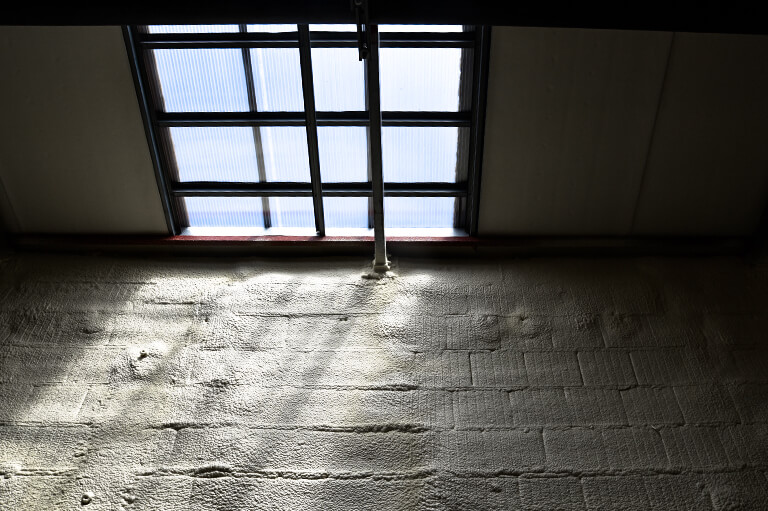
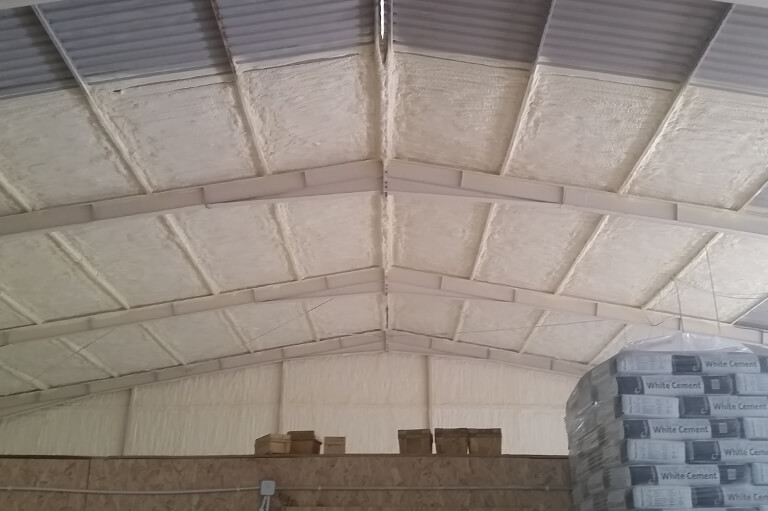
Photo gallery with closed-cell foam insulation of hangars